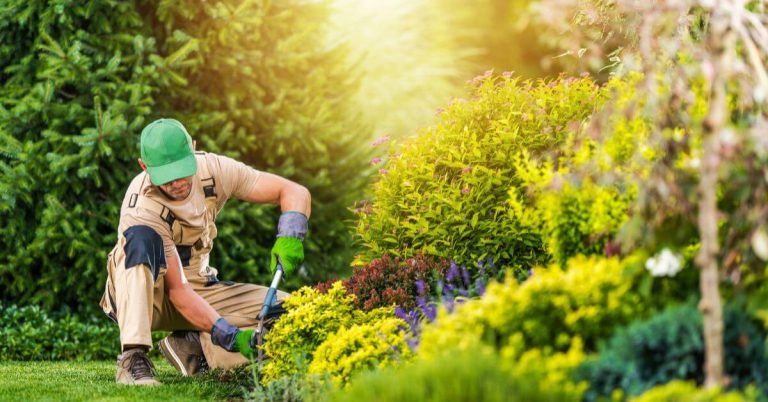
Landscaping in extreme heat requires more than endurance. It requires planning, hydration, frequent breaks, jobsite awareness, and a team that looks out for one another.
During a June 2026 report from WSB-TV Channel 2 Action News, Creech Landscape owner Jason Creech discussed how his company protects landscaping crews working long days in Georgia’s summer heat. With some team members outside for 10 or 11 hours a day, Creech emphasized the importance of pacing, drinking water, taking breaks, and monitoring coworkers for signs of heat-related illness.
“Our guys pace themselves and take breaks when needed. It’s brutal out there. They can’t just go, go, go. They need to get a lot of water and pace themselves throughout the day.”
Watch: WSB-TV report featuring Jason Creech and Creech Landscape
Why Is Landscaping in Extreme Heat Dangerous?
Landscaping is physically demanding work that often involves prolonged sun exposure, high humidity, heavy equipment, and continuous movement. These conditions can make it more difficult for the body to cool itself.
Outdoor workers are more likely to become dehydrated or develop a heat-related illness, according to the Centers for Disease Control and Prevention. The CDC records between 1,700 and 4,000 heat-related deaths in the U.S. every year, and people who work outdoors are among the groups at greatest risk. Risk increases when high temperatures and humidity are combined with direct sunlight, physical exertion, limited airflow, or insufficient hydration.
Heat-related illnesses can include:
- Heat cramps
- Heat exhaustion
- Heat rash
- Fainting or heat syncope
- Heat stroke
Heat stroke is the most serious heat-related illness and requires immediate emergency assistance. Confusion, slurred speech, loss of consciousness, or severe disorientation may indicate heat stroke. In those situations, 911 should be called immediately while the individual is moved to a cooler area and actively cooled.
How Does Creech Landscape Prepare Crews for Hot Weather?
Heat safety begins before landscaping crews arrive at the first property.
Jason Creech explained that his team holds a morning huddle to discuss the day’s conditions and any safety concerns. When high temperatures are expected, the conversation includes the anticipated heat index, hydration, pacing, breaks, and awareness of fellow crew members.
“We have a morning huddle, and in the morning huddles we talk about certain safety issues. This morning we were talking about the heat index, how long it’s going to be this week, make sure we got a lot of water, our guys pace themselves and take breaks when needed.”
This preparation helps the team understand that productivity should never come at the expense of personal safety.
The heat index is particularly important because it reflects how hot the weather feels when humidity is considered along with the air temperature. High humidity can make it harder for sweat to evaporate, reducing the body’s ability to cool itself.
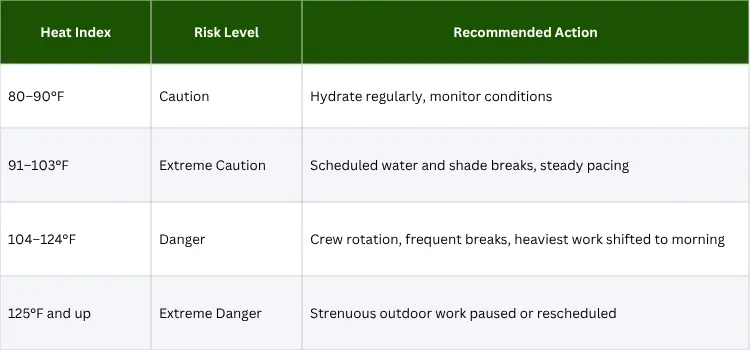
Heat index risk categories per the National Weather Service.
Why Are Water, Rest, and Shade So Important?
Water, rest, and shade are three of the most important protections for anyone working outside during hot weather.
OSHA recommends that employers provide cool drinking water and encourage workers to drink frequently rather than waiting until they feel thirsty. For jobs lasting longer than two hours, access to beverages containing electrolytes may also be appropriate because sweating causes the body to lose both fluids and salts.
Rest periods give the body time to cool down and recover. A shaded tent, air-conditioned vehicle, nearby building, fan, or other cool location may provide workers with relief from direct sunlight.
For Creech Landscape, breaks are not treated as an interruption. They are part of working responsibly in demanding weather.
“Guys are out there 10, 11 hours a day. We tell them to pace themselves, get plenty of water.”
How Does Team Awareness Help Prevent Heat Illness?
One of the most important elements of outdoor worker heat safety is the buddy system.
A person beginning to experience heat exhaustion may not immediately recognize the seriousness of the symptoms. Coworkers may notice unusual fatigue, dizziness, confusion, weakness, poor coordination, or changes in behavior before the affected worker asks for help.
Creech Landscape encourages employees to remain aware of the entire jobsite and the people working around them.
“That’s one of our core values is awareness and, you know, being aware of the job site, being aware of the conditions, being aware of your fellow workers.”
OSHA similarly recommends monitoring workers for signs of illness, planning for emergencies, providing heat-safety training, and using a buddy system, particularly for workers who are new or returning to hot-weather work.
For landscaping teams, awareness also supports general jobsite safety. Heat-related fatigue and dizziness can affect concentration, balance, judgment, and equipment handling.
What Are the Warning Signs of Heat Exhaustion?
Common warning signs of heat exhaustion can include:
- Heavy sweating
- Weakness or unusual fatigue
- Headache
- Dizziness
- Nausea
- Muscle cramps
- Irritability
- Rapid heartbeat
- Fainting
Someone experiencing possible heat exhaustion should stop working, move to a cooler location, loosen unnecessary clothing, and begin cooling down. Medical assistance should be requested when symptoms are severe, worsen, or do not improve.
Workers should never be encouraged to push through dizziness, confusion, weakness, or other signs of heat illness.
What Should Property Owners Expect During Extreme Heat?
During periods of extreme heat, professional landscaping crews may need to adjust how work is completed.
That can include starting earlier, rotating physically demanding assignments, taking additional hydration breaks, using shaded recovery areas, or allowing more time to complete certain services.
These precautions do not indicate a lack of efficiency. They demonstrate responsible management and respect for the people performing demanding outdoor work.
Homeowners and property managers can also support safe working conditions by maintaining clear access to the property, keeping pets away from active work areas, and understanding that crews may need additional breaks when the heat index becomes dangerous.
Why Does Crew Safety Matter to Creech Landscape?
A landscaping company’s work depends on the skill, consistency, and experience of its employees. Protecting those employees is therefore essential to delivering dependable service.
For Creech Landscape, safety is connected to its broader commitment to awareness, professionalism, and attention to detail. The same awareness that helps employees recognize a heat-related risk also helps them identify jobsite hazards, protect surrounding property, and complete landscape work carefully.
The WSB-TV report showed that extreme heat is not simply uncomfortable for outdoor workers. It can become a serious health hazard. Forsyth County Division Chief Jason Shivers specifically identified landscapers, roofers, construction workers, and other outdoor professionals as groups facing elevated risk during periods of high heat and humidity.
If you are evaluating providers for your own property, our guide to choosing the right lawn care company covers what separates a safety-conscious, professional crew from the rest.
Professional Landscaping With a Team That Values Safety
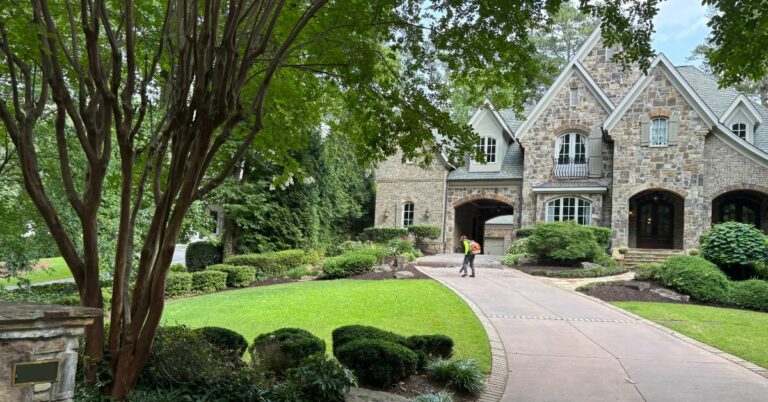
Creech Landscape provides landscape maintenance, enhancements, and design-build services throughout Alpharetta and North Metro Atlanta. Its services include mowing, pruning, irrigation maintenance, turf and pest management, seasonal color, landscape drainage, sod installation, landscape design, retaining walls, outdoor kitchens, and other outdoor improvements.
The company’s approach to landscaping in extreme heat reflects a larger commitment to preparation, awareness, and responsible service. By discussing weather conditions, encouraging hydration, allowing necessary breaks, and asking team members to watch out for one another, Creech Landscape works to protect the people responsible for maintaining Atlanta-area properties.
To discuss your residential landscaping needs, contact Creech Landscape or call 770-988-4635 to request a custom quote.
Frequently Asked Questions About Landscaping in Extreme Heat
Can landscapers safely work during extreme heat?
Landscapers can work during hot weather when appropriate safety measures are followed. These measures include hydration, shaded rest areas, adjusted work and rest periods, team monitoring, heat-safety training, and emergency planning.
What is the difference between heat exhaustion and heat stroke?
Heat exhaustion may cause heavy sweating, dizziness, nausea, headache, weakness, or fainting. Heat stroke is a medical emergency that may involve confusion, slurred speech, loss of consciousness, or an inability to control body temperature. Call 911 immediately when heat stroke is suspected.